Senate Majority Bipartisan Coalition Website

State Senator District E

Senate Majority Leader


Senator Cathy Giessel Newsletter

UPDATES


Issues affecting

your family, community and jobs.


December 18, 2025


Dear friends and neighbors,


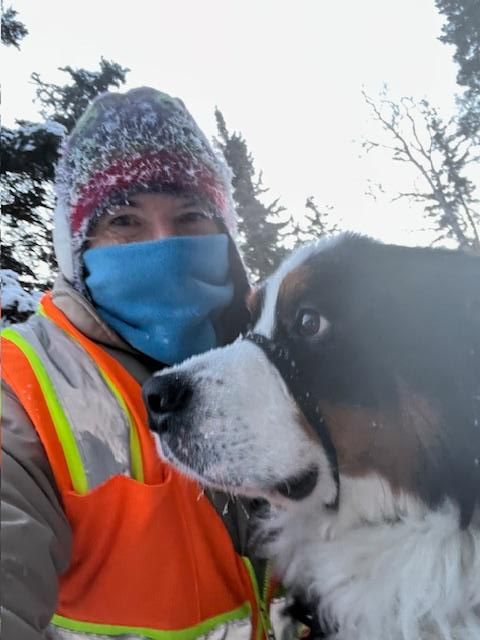
My dog, Andy, and I really enjoy these recent nice cold winter days! They are just what winter should be! And what Anchorage winters used to be when I moved down here from Fairbanks, in 1974.


This Sunday, Dec. 21 - Winter Solstice

Hours of daylight in:

Utqiagvik - zero hours

Fairbanks - 3 hours, 42 min

Anchorage - 5 hours, 23 min

Juneau - 6 hours, 21 min


Items in this Newsletter:

·     Financial Advisor Meme

·     Seward Highway Re-Design Advisory Committee Update

·     DOT's Weekly Safety Minute

·     Permanent Fund History - Fact vs Myth

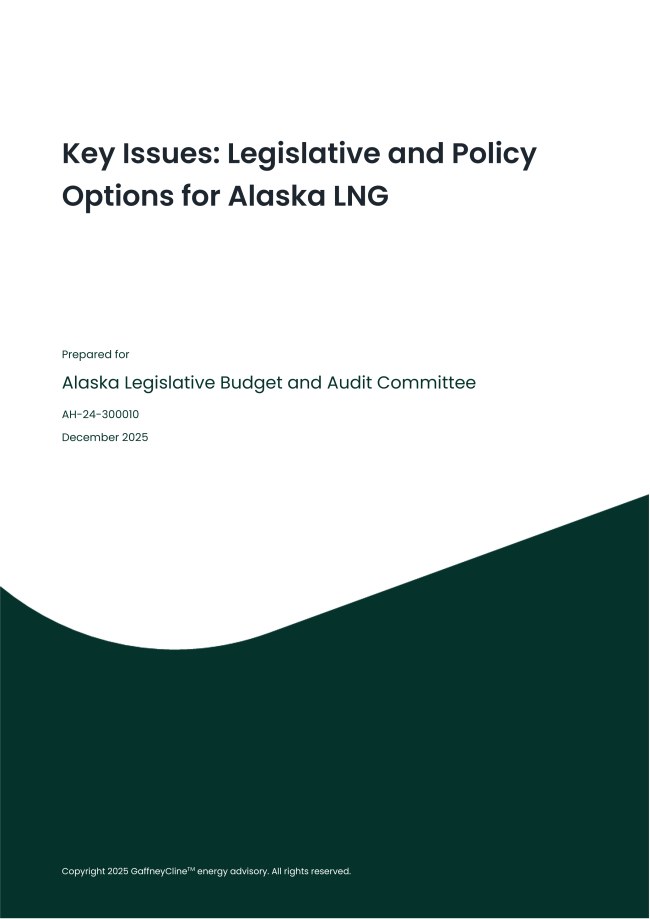
·     LB&A Legislative and Policy Options Report for LNG

·     Current Topics, Stuff I Found Interesting, Arctic Issues, Economy, Education, Politics, Healthcare,

·     Resource Values, Permanent Fund


A moment of humor is needed in this otherwise seriously grim array of events.

This is hilarious to me, but perhaps that's because I have 2 fur children and the above is all true!


Seward Highway Redesign Advisory Committee:


The Advisory Committee met last week. Based on the previous meeting and more discussions, they narrowed down the purposes and needs to four priorities and presented options for each.


I will update you with the actual maps of ideas being considered when those are made available. The website for the project is at https://sewardhighway.info/index.html


Lost history of Permanent Fund and the Dividend

It's holding us hostage today


What Is a “Generation”?

President Ronald Reagan famously warned that “Freedom is never more than one generation away from extinction.” The quote is often repeated, but rarely examined. Recently, my pastor cited it and then posed the essential follow‑up question: What is a generation?


The Oxford Dictionary defines a generation as “the average time in which children grow up, become adults, and have children of their own,” usually considered to be about 30 years.


President Reagan’s point was not abstract. He was reminding us that the lived knowledge of history—the details, the costs, the sacrifices, and the hard work behind major events—rarely survives intact beyond a single generation. Roughly thirty years is all it takes for firsthand understanding to fade and be replaced by secondhand stories, simplified narratives, or convenient myths.

This insight is directly applicable to the Alaska Permanent Fund and the later‑created Permanent Fund Dividend.


The Permanent Fund was established by Alaska voters in 1977, forty‑eight years ago—well over a generation. The Permanent Fund Dividend was created by the governor and legislature in 1982, forty‑three years ago—also more than a generation.


Recently, I asked a room of approximately forty Alaska business leaders how many of them had feet on the ground in Alaska in 1977 and were eligible to vote at the time. Only one person, besides myself, raised a hand. That means that one of the most consequential financial decisions of Alaska’s twentieth century is not known firsthand by nearly everyone in that room.


This loss of lived knowledge makes it remarkably easy to reshape the story of the Permanent Fund and the PFD in ways that do not align with historical fact. That is precisely what is happening today.


Most Alaskans no longer understand how the Permanent Fund was created or where its wealth truly comes from. Very few have ever traveled to the North Slope, stood on an oil drill rig, or driven an ice road on a mid‑winter Arctic day—where daylight doesn't exist and conditions are unforgiving.


Into this vacuum of historic experience has grown a fictional narrative: that the Permanent Fund Dividend is a “right,” owed to every Alaskan as personal compensation for oil that supposedly belongs to them.


That narrative is compelling. It is also completely false.


The Permanent Fund was not created as a personal entitlement program. It was established as a long‑term savings mechanism—designed to convert a finite, nonrenewable resource into enduring financial security for future generations of Alaskans.


When a generation loses its connection to how and why a system was created, it becomes vulnerable to misunderstanding—and eventually to misuse. President Reagan’s warning was about freedom, but the principle is universal: what one generation fails to teach, the next is free to forget—or to redefine.


The Myth of the PFD as a “Right”

The claim that the Permanent Fund Dividend is a personal right—owed to every Alaskan as direct compensation for oil taken from land they individually own—has no basis in Alaska’s constitutional text, its ballot history, or the public record of the time.


When voters approved the Permanent Fund in 1976 and it became effective in 1977, they did not create an entitlement program. They approved a constitutional amendment requiring that at least 25 percent of certain mineral revenues be deposited into a permanent savings account. The purpose was explicit and collective: to preserve a portion of Alaska’s nonrenewable resource wealth for the long-term benefit of the state.


There was no promise of annual checks. There was no assertion of individual ownership of oil revenues. And there was no suggestion that future legislatures would be bound to distribute earnings as cash payments to residents.


The historical context matters. Alaska had watched other resource-rich regions exhaust their wealth through short-term spending and political pressure. Our own Legislature had quickly spent the $900 Million from the first lease sale (though justifiably the needs were serious and many in our new state). The Permanent Fund was conceived as a guardrail—a structural protection against exactly that outcome. Its core principle was restraint: save first, spend carefully, and think beyond the present generation.


The Permanent Fund Dividend emerged later, in 1982, as a statutory policy decision by the governor and legislature. It was not embedded in the Constitution. It could have been designed differently—or not created at all. Its purpose was pragmatic: to give Alaskans a visible, personal reason to support preservation of the Fund’s principal and to resist raids on its earnings.


In other words, the dividend was a means to protect the Permanent Fund, not the reason the Fund exists.


Over time, as the generation that debated and enacted these decisions passed from public life, the dividend’s origin story blurred. What began as a policy tool gradually acquired the language of entitlement. The annual payment came to be described not as a distribution chosen by lawmakers, but as a moral or legal right.


That shift in understanding carries real consequences. Rights, by definition, are absolute and immune from reconsideration. Policies, by contrast, are designed to be evaluated against changing economic conditions, fiscal realities, and competing public needs. Treating the dividend as a "right" elevates it above schools, public safety, infrastructure, and other essential functions of government—outcomes never contemplated by the Fund’s creators.


The deeper danger is not disagreement over dividend levels. It is the loss of historical grounding that allows a savings account—created to serve future generations—to be reimagined as a present-day entitlement.


This is the dynamic President Reagan warned about. When one generation no longer remembers why an institution was created, the next is free to redefine it. Not maliciously, but confidently—and often incorrectly.


If Alaskans wish to debate the future of the Permanent Fund and the dividend, they should do so honestly, with a clear-eyed understanding of their origins. Stewardship requires memory. Without it, even the most farsighted decisions can be undone—not by force, but by forgetting.


Permanent Fund & PFD: Myth vs. Fact

Myth: The Permanent Fund Dividend is a constitutional right.

Fact: The Alaska Constitution creates the Permanent Fund, not the dividend. The dividend was established later by statute and can be changed by policymakers.

Myth: Every Alaskan is personally owed oil money.

Fact: Oil revenues belong to the State of Alaska. Voters chose to save a portion collectively for long-term benefit, not distribute it as individual compensation.

Myth: The Permanent Fund was created to pay dividends.

Fact: The Fund was created in 1977 to convert a finite, nonrenewable resource into lasting wealth for future generations. The dividend, created in 1982, was a policy tool to help protect that goal.

Myth: Reducing or changing the dividend violates voters’ intent.

Fact: Voters’ intent was to protect the Fund’s principal and ensure long-term stewardship. How earnings are used has always been a matter of public policy, not constitutional mandate.

Myth: The dividend comes from “free money.”

Fact: The dividend comes from investment earnings made possible by decades of disciplined saving—and from oil development carried out under some of the harshest conditions on earth.

Understanding the difference between myth and fact is essential to an honest conversation about Alaska’s future.


Opinion: The Permanent Fund debate isn't about rights. It's about reality. ADN

A previous opinion piece asserted that payment of the PFD is protected in state law and should be considered a “right” and is “legally mandated.” That legal argument was made back in 2017 in a lawsuit known as Wielechowski v. State of Alaska. In its ruling, the Alaska Supreme Court confirmed that constitutional limits on dedicated funds meant that earnings from the Fund were available not just for payment of the PFD, but also for the funding of any other state agency. Legally, the Alaska Legislature holds the power of appropriation and makes each budget decision based on its own merit, no matter what program funding formula may exist in state law. That is simply how it works. Today, funding of the PFD amount is subject to the same legislative budget approval process that funds all other state agencies.


Alaska Gas Pipeline

What will it cost us?


There is a lot of promise about a natural gas pipeline from the North Slope. As a lifelong Alaskan, I've heard about this since the mid-70s. I've sat through countless meetings with countless plans to bring the pipeline to reality. Is the present idea the one that will really work?


More important: What will it cost Alaska, you and me? What do we need to give up in terms of profits in order to make the pipeline "pencil out" for the builders?


The document here reviews what a consultant tells us. GaffneyCline is a global energy consultant. They are also owned by Baker Hughes, one of the many companies with a piece in building this project. The question of conflict of interest has been asked and remains elusive.


I give you this report so that you are seeing the same thing Legislators are seeing.


Opinion: A new energy project, new risks and new responsibilities for Alaska. ADN

(My comment: This is a good overview. Main point to understand: Glenfarne is not transparent. They are not in this to benefit Alaska; they are in it to turn a big profit.)


Opinion: Christmas is the season of pipeline miracles. ADN

The residents of Alaska would be far better served by a factual examination of their choices instead of misinformation and misleading arguments. Every path for meeting the energy needs of the Railbelt has an increased cost, risk and a potential for failure. 


LNG pipeline legislation debate divides Alaska lawmakers after consultant calls it ‘essential’Alaska News Source

Those guarantees can mean a “tax freeze” — locking in the current tax system for the life of the project — potentially 20-30 years, according to GaffneyCline’s presentation to lawmakers. If Alaska later raises taxes or imposes new regulations, the presentation said the state would have to compensate investors to maintain their original profit expectations. Another ask is the lowering of property taxes for the pipeline, something GaffneyCline’s November presentation said could cost the project $1 billion and add 9% to the cost of delivered gas.


Dunleavy to propose lower property tax to support LNG mega-project. ADN

That’s one-tenth of the 20 mills, or 2%, that the state levies on oil and gas infrastructure, a portion or all of which can go to local governments with such infrastructure, depending on their rates.

The governor said his bill would cover the length of the project’s lifetime, which has been estimated at 30 years or more.


Opinion: A new energy project. New risks and new responsibilities for Alaska. ADN


Current Topics

Alaska revenue forecast predicts more oil, but its importance to the state budget is declining. Alaska Beacon

In the next fiscal year, just 23% of the state’s general-purpose revenue is expected to come from petroleum revenue — royalties, property taxes and production taxes.The Permanent Fund transfer would account for almost 66% of the general-purpose money.


FEMA warns of scams targeting Halong survivors.  KYUK

The Alaska Housing Finance Corporation warned in late November that survivors of Typhoon Halong should also be aware of fake assistance webpages, and of anyone who contacts survivors directly requesting personal information, like fees or bank details, in exchange for financial assistance.


Disaster aid deadlines extended into 2026 for those affected by Western Alaska storms. Alaska Beacon

The State of Alaska and the Federal Emergency Management Agency have extended their deadlines to apply for individual disaster assistance for those impacted by storms in Western Alaska, including Typhoon Halong.


Things That I Found Interesting

Alaska DOT is planning a new dock for one of the state’s most remote ferry terminals. Alaska Beacon

More than 600 miles southwest of Anchorage, on the Alaska Peninsula, the town of just 56 people is the gateway to the Izembek National Wildlife Refuge and home to a 10,000-foot runway used as an emergency stop for trans-Pacific flights.


Alaska Airlines launches Starlink Wi-Fi systems on Embraer planes. ADN

Alaska had expected to complete its first Starlink installation in 2026 but sped up the rollout after receiving certification from the Federal Aviation Administration faster than expected, Traynor-Corey said. It will begin installing Starlink systems on its 737 fleet next year.


Lonelier offices. Axios

There's growing concern that a technology that's amazing at leveraging the collective intelligence of humanity is paradoxically pulling humans away from collectively coming together to come up with the next big thing.


Arctic

President Trump appoints Thomas Emanuel Dans to lead U.S. Arctic Research Commission. Arctic News

President Donald J. Trump has appointed Thomas Emanuel Dans of Sugar Land, Texas to lead the United States Arctic Research Commission (USARC), an independent federal agency that advises the President and Congress on America’s research activities in the Arctic.

(My Comment: Oh good. A Texan with oil and gas background. Makes sense that he would know a lot about the Arctic…to this President only.)


Russia deploys all eight nuclear icebreakers for the first time to keep Arctic export routes open. G Captain

Russia has, for the first time, deployed its entire fleet of eight nuclear-powered icebreakers simultaneously to maintain winter shipping lanes in the Gulf of Ob and the Yenisei Gulf, underscoring the strategic importance of Arctic energy exports. The unprecedented deployment is focused on ensuring the flow of oil, liquefied natural gas (LNG), and mineral cargoes from Russia’s Arctic production regions, including the Arctic Gate oil terminal, Yamal LNG, and Norilsk Nickel.


Arctic Resiliency Training prepares Airmen for the cold. JBER

Through the 11th Air Force, JBER provides Arctic Resiliency Training, a 20-hour hands-on course that teaches Airmen the basic skills they may need to survive in arctic conditions. This training is designed to make sure Airmen are ready for wherever the mission takes them.

(My comment: This is something countless new residents need to know! Sandals and no coat or hat does not comprise winter gear.)


Economy

Trump calls affordability crisis a 'hoax.' The data tells a different story. Alaska Public Media

Some 57% of voters said in a Harvard CAPS/Harris poll released this week that Trump was "losing the battle against inflation," while 68% of respondents to a AP-NORC Center for Public Affairs Research poll from October said the economy was poor or very poor.


BNY becomes first major financial firm to double "Trump accounts" for employees' newborns. Axios

The BNY match doesn't just double the starting amount. Thanks to compounding returns, it could double the gains for each child, depending on market volatility and timing. 18 years ago, if $1,000 was put into the S&P 500, it would be worth a little over $7,000 today, while $2,000 would be worth a little over $14,000.

(My comment: This is true of any bank account or investment. Alaska children got $1000 in Oct 2025. What happened to it? Did the parents spend it on Amazon, or vacation in Hawaii? Or other short-term “want”?)


Struggling small breweries blame rising costs and ‘draconian’ state restrictions. ADN

Alaska’s small breweries and wineries are struggling amid a decline in drinking, rising costs for materials and a competitive landscape, many say.

(My comment: Is this an industry that over-built? Did brewers underestimate the demand for beers?)


Wall street is wary of stocks beating the economy. Axios

The stock market keeps hitting record highs, while Americans are facing an affordability crisis. A widening wealth gap raises the risk that a market downturn turns into an economic one that leads to a recession. “Income inequality has increased greatly in recent years," writes David Kelly, chief global strategist with J.P. Morgan Asset Management.


Winter tourism has grown in Alaska, but economic concerns caused a recent dip. Alaska Public Media

Travel industry experts expect Alaska to have a strong winter tourism season, despite a small dip in visitation last year. Last winter saw a drop of 21,700 travelers compared to the previous year. But over the last two decades the number of travelers coming to the state each year between October and April has grown by almost 150,000.


Energy Resources

POSCO's steel supply for Alaska LNG project irks US manufacturers. The Korea Times

A week after POSCO International, the group's trading and energy unit, signed an agreement Dec. 1 with Glenfarne, the project’s lead developer, regarding the former’s supply of steel in exchange for importing LNG, the Coalition for a Prosperous America (CPA) issued a statement raising alarm over the use of “made-in-Korea” steel. “A proposed 807-mile natural gas pipeline intended to bring gas from Alaska’s North Slope to a new export terminal on the Kenai Peninsula in Southcentral Alaska will be fabricated in Korea despite the administration’s headline ‘50 percent’ steel tariff,” CPA said Wednesday (local time).


1 big thing: Why oil is chill despite rising heat on Venezuela. Axios

The soft macro picture: The big story in oil markets right now is the global supply surplus as production growth outpaces demand increases.

Opinion: A new energy project, new risks and new responsibilities for Alaska. ADN

(My comment: This is a good overview. Main point to understand: Glenfarne is not transparent. They are not in this to benefit Alaska; they are in it to turn a big profit.)


Opinion: Christmas is the season of pipeline miracles. ADN

The residents of Alaska would be far better served by a factual examination of their choices instead of misinformation and misleading arguments. Every path for meeting the energy needs of the Railbelt has an increased cost, risk and a potential for failure. 


LNG pipeline legislation debate divides Alaska lawmakers after consultant calls it ‘essential’Alaska News Source

Those guarantees can mean a “tax freeze” — locking in the current tax system for the life of the project — potentially 20-30 years, according to GaffneyCline’s presentation to lawmakers. If Alaska later raises taxes or imposes new regulations, the presentation said the state would have to compensate investors to maintain their original profit expectations. Another ask is the lowering of property taxes for the pipeline, something GaffneyCline’s November presentation said could cost the project $1 billion and add 9% to the cost of delivered gas.


Opinion: A new energy project. New risks and new responsibilities for Alaska. ADN


Education

After veto overrides, Alaska Gov. Dunleavy drops push for major education reform. Alaska Public Media

Gov. Mike Dunleavy is dropping a longtime priority ahead of next year’s legislative session. At his annual holiday open house on Dec. 9, the Republican governor told reporters he isn’t planning to revive his push to reform the state’s schools.

(My comment: Next steps would be to require any student receiving state subsidies to participate in competency testing (accountability for the public money). I would also say that students who enroll in “correspondence” programs must enroll in the program offered within their district. Right now, this is a “cash cow” for remote “correspondence” programs, siphoning money away from local school districts.)


Elections

Senate rejects extension of health insurance subsidies, leaving prices to rise for millions. ADN

But there appeared to be little interest in compromise. Despite the potential for bipartisan agreement, Republicans and Democrats have never engaged in meaningful or high-level negotiations on a solution, even after a small group of centrist Democrats struck a deal with Republicans last month to end the 43-day government shutdown in exchange for a vote on extending the ACA subsidies. 

(My comment: Open Primary and Ranked Choice General Election here in Alaska has stopped this kind of gridlock in our Legislature. We have bipartisan work being done in both Alaska House and Senate…because of our present election system. Reject efforts to repeal our election system. Vote NO on any ballot measure that repeals Alaska's election system.)


Politics

Opinion: Alaska can't afford secret deals and fiscal fantasy. ADN

 Crum’s investment decision (is) “gross incompetence” that “doesn’t pass the test of reasonableness in any shape or form.”


Disasters, dividends and deficit: Alaska governor unveils first-draft state budget. Alaska Beacon

The governor’s $7.75 billion draft budget is similar to what he proposed last year, but this year’s proposal also includes a substantial supplemental budget intended to compensate for unforeseen costs in the current state budget. 

(My comment: This is an unsustainable, irresponsible, clueless proposal. This tells me that this lame-duck governor is again handing the leadership to the Legislature. That’s fine. We can do the leading. The question to voters is why did you choose this person to the highest office in the state?)


Proposed PFD amount unveiled in 2027 state budget released by governor. Alaska's News Source

The budget proposal includes a full statutory Permanent Fund Dividend worth $3,650 for each Alaskan resident, which would make it the largest PFD check in the state’s history.


Judge restores federal funding for museums and libraries, including in Alaska. Alaska Public Media

In early December, the U.S. Institute of Museum and Library Services said the funding had been restored. The move came after a Rhode Island District Court judge ruled last month on a lawsuit brought by 21 states over the cuts. The judge ruled that the funding cancellation was unconstitutional.


Catch up quick on policy: Nuclear and advocacy. Axios

Oklo gets OK: Advanced nuclear startup Oklo announced that the Energy Department has approved a preliminary safety analysis for its fuel fabrication facility at Idaho National Laboratory. The facility will make fuel for Oklo's Aurora reactor, which uses neutrons with high kinetic energy to sustain a nuclear fission chain reaction instead of the slower thermal neutrons used in conventional reactors.

(My comment: Oklo is the company who was awarded the contract for a reactor at Eielson AFB in Fairbanks.)


Dunleavy to propose lower property tax to support LNG mega-project. ADN

That’s one-tenth of the 20 mills, or 2%, that the state levies on oil and gas infrastructure, a portion or all of which can go to local governments with such infrastructure, depending on their rates.

The governor said his bill would cover the length of the project’s lifetime, which has been estimated at 30 years or more.


Alaska History

·     Dec. 21 - Winter Solstice

·     Fairbanks - 3 hours, 42 min

·     Anchorage - 5 hours, 23 min

·     Juneau - 6 hours, 21 min

·     Utqiagvik - zero hours

·     Dec. 22 - Last day of Hanukkah

·     Dec. 25 - Christmas


Alaska Resource Values


Alaska North Slope crude oil price (12/17/25): $60.06

FY26 budget (beginning 7/1) is fully funded at

$64/barrel of oil.


History of prices:

10/16/25: $63.17

9/2024: $63.63

9/30/23: $87.99

9/30/22: $86.91

6/29/22: $116.84

3/08/22: $125.44

12/22/21: $75.55

March 2020: $12.29

7/3/2008: $144.00

ANS production (12/16/25): 481,118 bpd


Coal's future and the uncertainties in tow. Axios

Global coal demand hit a fresh record this year, but is slated to plateau in coming years and even dip slightly by 2030, the International Energy Agency's latest look-ahead finds.


Precious Metal Prices

December 17, 2025

Gold - $4341.29

Silver - $66.23

Platinum - $1954.90

Palladium - $1681.13

Rhodium - $8275.00


Alaska Permanent Fund

website

The projected payment to the state General Fund for upcoming Fiscal Year 2027, under the Percent-of-Market-Value (POMV) formula, is to be $4 billion, up from $3.8 billion for FY 2025, the current year.


The Fund’s rate of return over five years has been 9.54%

• For the first three months of the FY 2026 fiscal year, or July 1 through September 30, the Fund had $2.21 billion in “statutory net income.” 


Fund value December 15, 2025 - $87,552,600,000

PFD payout from ERA, Fiscal years 1982-2025: about $33 billion

Over $100 billion total earnings over lifetime of the Permanent Fund


Feedback is always welcome.

Have a great week!


Cathy 


Personal Contact:

907.465.4843

sen.cathy.giessel@akleg.gov


Past Newsletters on my website


My Staff:

·     Chief of Staff: Jane Conway (from Soldotna)

·     Legislation Aide: Paige Brown (from Anchorage/Girdwood)

·     Resources Committee Staff: Inti Harbison (from Anchorage)


Copyright © 2025. All Rights Reserved.


Senator Cathy Giessel's Newsletter | 12701 Ridgewood Rd | Anchorage, AK 99516 US