Kawasaki-Enews-Header-2021-B.jpg

3 March 2026

View as Webpage

Dear Neighbors,


The legislature is quickly approaching a midpoint which will quicken legislative hearings on bills and begin hearings on the State Operating Budget in the Senate. The personal bill deadline came and passed so there will be no new bills introduced this year unless they come from a Standing Committee or the Governor. Diligent work begins on the bills that are currently in committee in both chambers to that we can complete work in due and regular time.


While there is a lot of activity, there are also issues that directly impact our work here in Juneau, but may be out of our direct ability to change. For instance, the unilateral attacks by the US in Iran have caused oil prices to rise which makes it good for balancing the state budget, but bad for people who use gasoline or heat their homes. My Committee introduced a resolution in support of the US-Mexico-Canada Agreement that helps to reduce tariffs that particularly impact Alaska small businesses.


The federal government recently requested and then received confidential Alaska voter data in opposition to our broad sweeping Alaska privacy laws that are baked into the Alaska Constitution. The factory fish trawling that occurs in federal and international waters outside of the laws of Alaska also happens inside some state waters in some fisheries and SB161 by Senator Cronk seeks to shut down that type of fishing gear.


I will update you on these and many other issues in the recent update of the Legislative E-Newsletter below.


A Successful Town Hall!

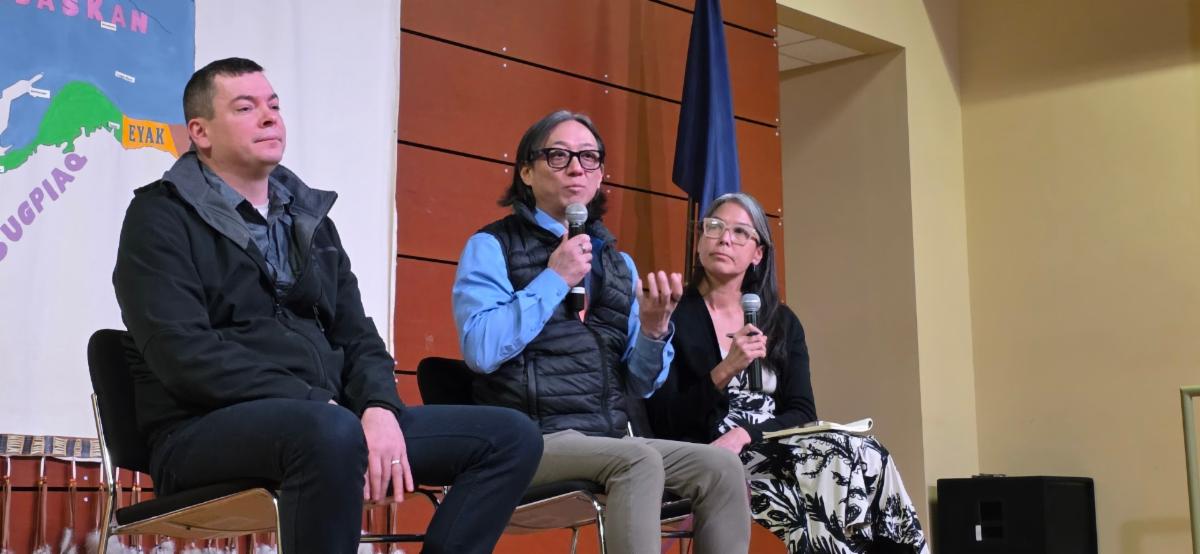
On the weekend of February 21, I had the pleasure of travelling back to Fairbanks to check in with my constituents after the first month of session. To make the most of my time back home, I arranged a town hall at the Morris Thompson Cultural Center with both Representatives Dibert and Stapp. While we may have different opinions, we all represent the people of Senate District P, so we endeavor to work together and find workable solutions for a better Alaska. My two colleagues and I fielded questions for over an hour, ranging from the budget to the different bills we are carrying in the legislature. Afterwards, there was a meet-and-greet with sandwiches.


All of us opened with remarks about what we are currently focusing on in Juneau. I started by drawing attention to the State of Alaska's decision to hand over its voter registration rolls to the federal government, a topic I will cover later in this newsletter. Representative Stapp discussed his role on the House Finance Committee, and Representative Dibert spoke about the great team she is supported by in her office. Then we opened the floor to questions.


One of the first questions dealt with the supplemental budget amendment that is working its way through the legislature, which includes relief funding for the victims of Typhoon Halong and money to unlock federal funding for the upcoming construction season. While I have not yet had a chance to vote on the issue, Representatives Dibert and Stapp were able to speak to their votes. Stapp stated that this sort of rushed budgetary measure was irresponsible and later said that the legislature needs to scrutinize the budget to identify programs that are defunct yet still being funded. Representative Dibert voted for the supplemental budget and highlighted its need for the victims of Halong.


The budget was a hot topic during this event, and I highlighted that the state used to have enough funds to pay for government services before the passing of SB21 in 2014, when the oil companies were given huge tax credits on the promise of economic prosperity for Alaska. A promise we have not seen fulfilled. While we were all getting along on stage, the same couldn’t be said in the audience. SB238, the Freedom to Read Act, sparked debate in the crowd. A small minority of alaskans would seek to restrict access to library materials because they disagree with the content. SB238 would create a statewide policy to ensure that our libraries would remain a free marketplace of ideas. Neither the government nor special interest groups should ever dictate what information a citizen can access. 


Privacy is Essential To Alaskans

The Trump Administration recently demanded confidential and private voter information of every registrant in every state in an unprecedented power grab to federalize local and state elections. Like most other states, Alaska objected to providing personal information to the federal government in late May. This autumn, a second request from the federal government ended with the State Division of Elections releasing confidential and sensitive information of every Alaska voter.


The Senate State Affairs Committee is hosting a Joint Committee Hearing on this breech of personal information to hear from legal and privacy experts. The hearing will be held on Wednesday, March 4 from 1:30pm-3pm in the Capitol. You can watch online at www.akl.tv or through Gavel to Gavel on your local public television channel.


Trawling Fisheries and Our Ocean Environments

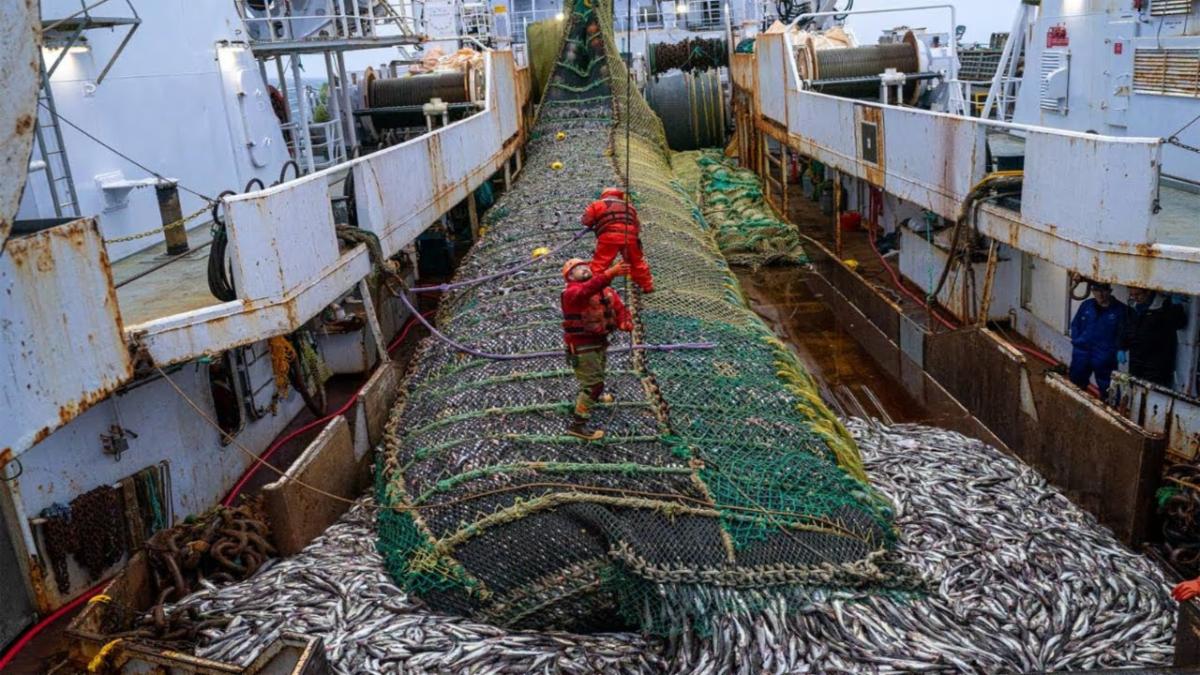
Harvesting fish using trawling gear is regulated around the world. While it may represent a good economic way to harvest a target fish for the owner of the trawling operation, it is a poor way to capture fish, causes environmental damage to the surface of the ocean floor and catches species of fish that are unwanted or unintended.


The Alaska Delegation under the Obama Administration had worked to heavily curb bycatch in the Bering Sea which at the time was more than 100,000 king salmon per year destined for the Yukon-Kuskokwim Rivers and our Canadian partners up-river. That fishery for pollock and cod species essentially devasted the Yukon-Kuskokwim salmon fisheries that exist up the river all the way to Canada. For centuries, Alaskans had used that fishery for subsistence and minimal commercial fishing and the families of the Yukon River have had to put their nets away for over 7 years now. Alaskans deserve answers for why these fishing gear types are allowed to continue fishing while they still intercept bycatch fish that are destined up the interior rivers of Alaska.


SB161 by Senator Mike Cronk will be heard in the Senate Resources Committee and will be open to pubic testimony. The hearing is on Wednesday, March 4 from 3:30-5pm. You can call in during that time at 844.586.9085. I will review SB161 through the lens of preserving the way of life for Alaskans and subsistence users first. While SB161 only controls state waters within the three-mile from shore, it might get the federal dialog moving on the heavier ships that are in the wide-open oceans.


Rural Health Transformation Program Deadline March 11

I also wanted to share with my neighbors that the Rural Health Transformation Program deadline is quickly approaching. If you're a part of an organization that would benefit from applying, apply before March 11th. Here's a resource Guide for any organization interested in applying. If you wish to leave a public comment about the Rural Health Transformation Program, you can do so before March 12th.

SJR25: A resolution For Alaska

On February 23, Senate Labor and Commerce heard the resolution I sponsored. SJR25 urges the federal government to continue the United States-Mexico-Canada Agreement (USMCA), modernize it and remove unnecessary tariffs that reduce its efficiency.


This trade agreement is a bipartisan and highly profitable agreement between the three countries of North America and is especially important for Alaska, primarily due to Alaska’s lone land border being with Canada. The state and Canada participate in over a billion dollars in annual trade with each other. USMCA increases supply line efficiency leading to cheaper goods for Alaskans.


In July of 2026, USMCA is scheduled for its first review. Review only occurs every six years, and given the rapid pace of economic and technological development, it is essential that we capitalize on this opportunity. Continuance is also essential for long-term economic planning and attracting investment in Alaska. Businesses and investors need the stability and predictability that USMCA provides.


It is even more important given the recent strain on our relationship with participating nations caused by recent tariffs. The benefits of a positive relationship with Canada range from mutual tourism to defense partnerships, and unnecessary tariffs endanger this relationship while passing costs on to Alaskan consumers.


I will continue to work to ensure the federal government understands and supports the unique needs of Alaska, along with our Canadian partners.

Wrongful Convicted Alaskans Deserve Compensation

Last week, I had the opportunity to speak before the Senate Finance Committee about SB167, a piece of legislation built on a simple, non-partisan idea:


Mistakes made by the state should not lead to the permanent taking of personal property.


The
Alaska Department of Law works hard to keep our communities safe through prosecuting crimes. But it is also their duty to make sure that every prosecution is fair and every conviction is just. If the system gets it wrong, the responsibility does not end when someone leaves jail. We need to make things right by returning personal property, like PFDs, that would have been in their pockets if no mistake had happened.


During the hearing, I was glad to be joined by Jory Knott, the Executive Director of the Alaska Innocence Project, who shared some eye-opening facts about how Alaska compares to other states:


•In 2017: 18 states did not offer any compensation for those wrongfully convicted.

• Today: Only 12 states, including Alaska, still have no form of compensation.


Fixing these injustices isn’t a new idea. In 2017, a similar bill passed the House with an impressive 38-1 vote. It is time to build on that momentum and see it through. If we truly believe in a system of "justice for all," we need to be ready to correct our mistakes when justice is not served. SB167 is a meaningful step toward giving victims of wrongful convictions the fresh start they deserve as they work to rejoin our communities.

Hearings and Public Testimony


The Legislature publishes the next week hearing schedule on Thursdays and one can find them at the Alaska Legislature website HERE. There are also a couple of hearings that directly impact the interior and Fairbanks that are highlighted below.


Legislative Teleconference Phone Numbers
All other Callers


(844) 586 - 9085

From JNU
586- 9085
From ANC 563 - 9085 


Notable Public Testimony Opportunities


March 4


SB178 "EXPAND EARLY INTERVENTION SERVICES" Senate Finance 9:00 AM

SB93 "EARLY EDUCATION PROGRAMS" Senate Finance 9:00 AM


HB208 "LNG IMPORT FACILITIES" House resources 1:00 PM


SB205 ”OFFICERS/FIREFIGHTERS: DISABILITY” Senate Labor and Commerce 1:30 PM

SB209 “GRAD REQUIREMENTS & PROFICIENCY TOOLS” Senate Education 3:30 PM

SB161 “PROHIBIT BOTTOM TRAWLING” Senate Resources 3:30 PM


March 5


HB282 “AUTOMATED TRAFFIC CAMERAS” House Comm & Regional Affairs 8:00 AM

HB155 “ALCOHOL SALES: LOCAL OPTION” House Comm & Regional Affairs 8:00 AM

HJR32 “RURAL HEALTH TRANSFORMATION PRGM.” House Health & Social 3:15 PM

HB232 “MINOR MENTAL HEALTH: AGE OF CONSENT” House Health 3:15 PM

SB193 “PRACTICE OF NATUROPATHY” Senate Health 3:30 PM

SB203 “PROHIBITED FIREARM CONVERT DEVICES” Senate State Affairs 3:30 PM


SB243 “DEFINITION OF PROHIBITED WEAPON” Senate State Affairs 3:30 PM


March 6


HB316 “ADJUST DAMAGE LIMIT: PERS INJ/WRG DTH” House Judiciary 1:00 PM

HJR38 “PUBLIC SAFETY TELECOMMUNICATORS” House Labor & Commerce 3:15 PM


My Staff and I are Here for You


As always, I will continue to keep you updated on what I’m working on in Juneau throughout the session. If you have any questions about anything going on in the Capitol or at home, feel free to give me a call or shoot me an email – as always, my staff and I are working for you. We will assist you with the issues important to you and your family.

Working Hard for Fairbanks Families,

Senator Scott Kawasaki

Alaska State Senator

Serving the City of Fairbanks, Ft. Wainwright & Badger Road

sen-kawasaki-type.png

As your Senator, I am here to listen and help. Contact me anytime.

contact-congress-2.png

Senator

Lisa Murkowski

Fairbanks Office:

101 12th Avenue, # 172

Fairbanks, AK 99701

(907) 456-0233 or Email


Senator Dan Sullivan

Fairbanks Office:

101 12th Avenue, # 328

Fairbanks, AK 99701

(907) 456-0261 or Email


Congressman

Nick Begich

Fairbanks Office:

542 4th Avenue #210

Fairbanks, AK 99701

(907) 251-4560 or Email


Facebook  Twitter  Instagram
contact-info.png

IN JUNEAU:

Phone: (907) 465-3466

FAX: (907) 465-2937

State Capitol Building

Juneau, AK 99801


IN FAIRBANKS:

Phone: (907) 456-7423

1292 Sadler Way Suite 308

(AlaskaUSA Credit Building)

Fairbanks, AK 99701


Toll Free: (866) 465-3466

Email

EMAIL

Sen.Scott.Kawasaki@

akleg.gov

Web

WEB

aksenatedems.com/

sen-kawasaki

voice-opinions.png

Here are some ways

to let your voice be heard regarding issues important to you.

Write a Letter

to the Editor: submit up to a 350 word letter to the Fairbanks News Miner via their website: http://newsminer.com

Contact the Governor:

Governor Dunleavy's Fairbanks office may be reached at (907) 451-2920. You can also visit the state website at gov.alaska.gov