|
Dear Neighbors,
The Legislature is rounding out the 30 days of the 121-day session here in the State Capitol. As the final month begins to wind down, the committee process does too as only a few bills will continue on their approach to passage. There are many bills that remain in either the House or Senate Finance Committees or are awaiting final passage on the floor or which would be considered ‘dead’ and likely not to pass this year. Of the roughly 700 bills that are introduced in a Legislature, only 100 will end up passing both chambers and then go on to the desk of the Governor for his signature or veto.
The Legislature has made a few major advances in order to adjourn on time in due and in regular form. The House has passed a version of an operating budget that the Senate will begin to review and then amend with changes as the process continues. A version of a capital budget is passed by the Senate and then will go to the House for its review and amendments. One of the newer focuses has been on war-driven oil prices and how it is rippling through the state including our budget. The longer that oil prices are near the $100 mark, the easier it is to pass a state budget, but the more difficult it becomes for regular Alaskans, school boards, small businesses, churches and charities. We are going to discuss some of these challenges and how the state will try to ease some troubles in the near future-and beyond.
| | AKLNG and the Pipeline Predictions | |
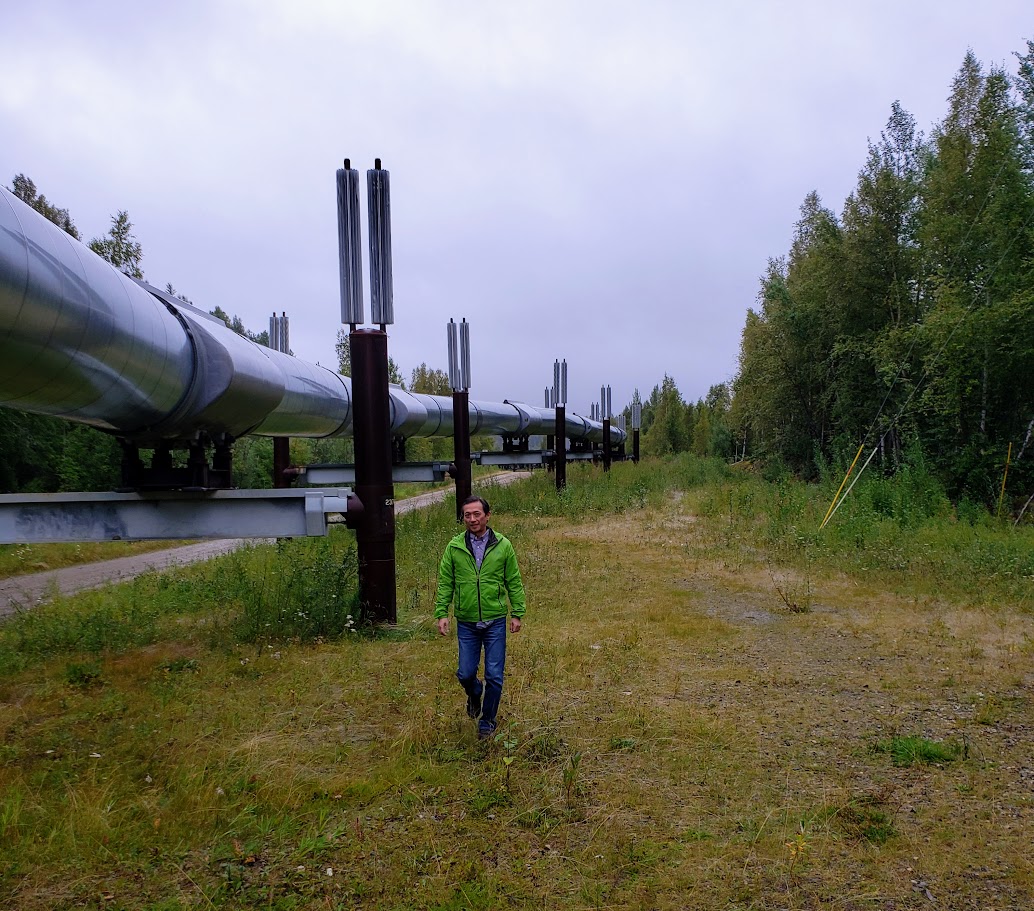
From now until the remainder of the session (28 days) I will publish an update to the important AKLNG legislation and where it is in the lengthy process. With only 28 days remaining, it seems almost impossible to pass any meaningful legislation to get a pipeline moving forward, but the stakes are just too high to give up.
The last two weeks, the Senate Resources Committee has had hearings every day including meetings in the morning and afternoon to obtain and then deliberate on information provided to the committee. SB280, is a bill from Governor Dunleavy that establishes a new Alternative Volumetric Tax on gas but also removes almost all other taxes, including local property taxes from the project. We know that a gasline would produce nearly $500-million in property taxes alone every year which would offset the inflation and increased costs to local property taxpayers. The tax-shifting move would also mean that school districts would have to come up with funds at the local level through local tax payments.
The next week, we will begin discussion of the primary element that Interior Alaskans care about and that is whether there would be a lateral line to Fairbanks. As you may know, this line is not in the current plan and estimates of cost for a simple design are almost $1,000,000,000. If there is no grant or other state support, it would be rolled into our own tax base and would not result in any low-cost energy. In fact, a billion-dollar lateral pipeline may put costs higher for as long as it would take to pay down the entire stake in the pipe. Several interior legislators have requested the billions in funding to ensure a lateral line isn’t left to local taxpayers, but the budget has not been completed for the year and this one is a pretty hefty lift for the Interior Delegation.
| Beware of Workers: Construction Season Has Begun! | |
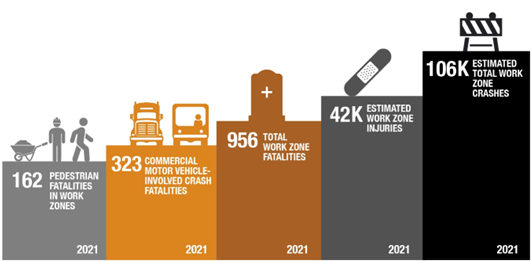
Yesterday kicked off Work Zone Safety Awareness Week, despite the widespread snow in town! The annual spring campaign signifies the start of construction season and encourages safe driving through highway work zones. The key message is for drivers to use extra caution in work zones.
In 2018, I introduced and passed the Move Over Law, which came from a constituent in North Pole. The bill requires approaching traffic to move into another lane and slow down when approaching a vehicle performing road service work displaying flashing lights. I introduced this bill at the request of a traffic flagger who brought this to my attention in the hopes of decreasing the number of work zone injuries due to drivers.
Go Orange Day will be this Wednesday April 22nd to remind the public of these important workers and the safety they are due. To find out more about the events and other resources, click here.
| Civility and Why it Matters | |
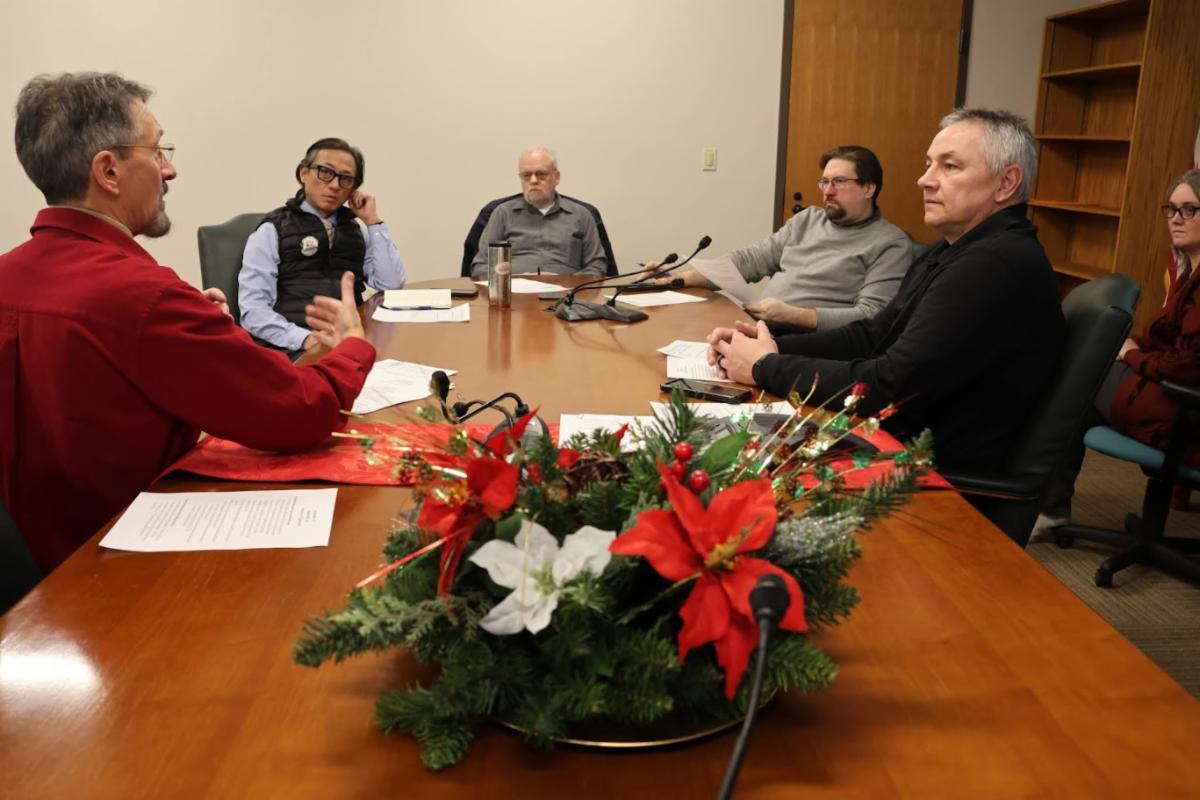
As we navigate the complexities of this legislative session, I am continually reminded of what makes Alaska’s approach to governance so unique. We are the only state in our union with bipartisan coalitions in both bodies. I am deeply grateful to serve as a member of our bipartisan Senate Majority, a coalition that prioritizes the needs of our neighbors over rigid party lines. In a time when political silos are the norm, our caucus stands as a testament to the idea that we can and should work together. Whether we are discussing education funding or infrastructure, solutions that move Fairbanks and our entire state forward, regardless of which side of the aisle a legislator calls home.
However, while we work to build bridges within the Capitol, I am increasingly concerned by the rising tide of violent rhetoric and actions. Disagreement is a healthy, vital part of a functioning democracy, but it must be rooted in mutual respect. When political discourse shifts from debating policy to using language that incites fear or violence, we all lose. Our community thrives on constructive conversation. I believe firmly that we can advocate passionately for our values without resorting to tactics that intimidate our fellow Alaskans.
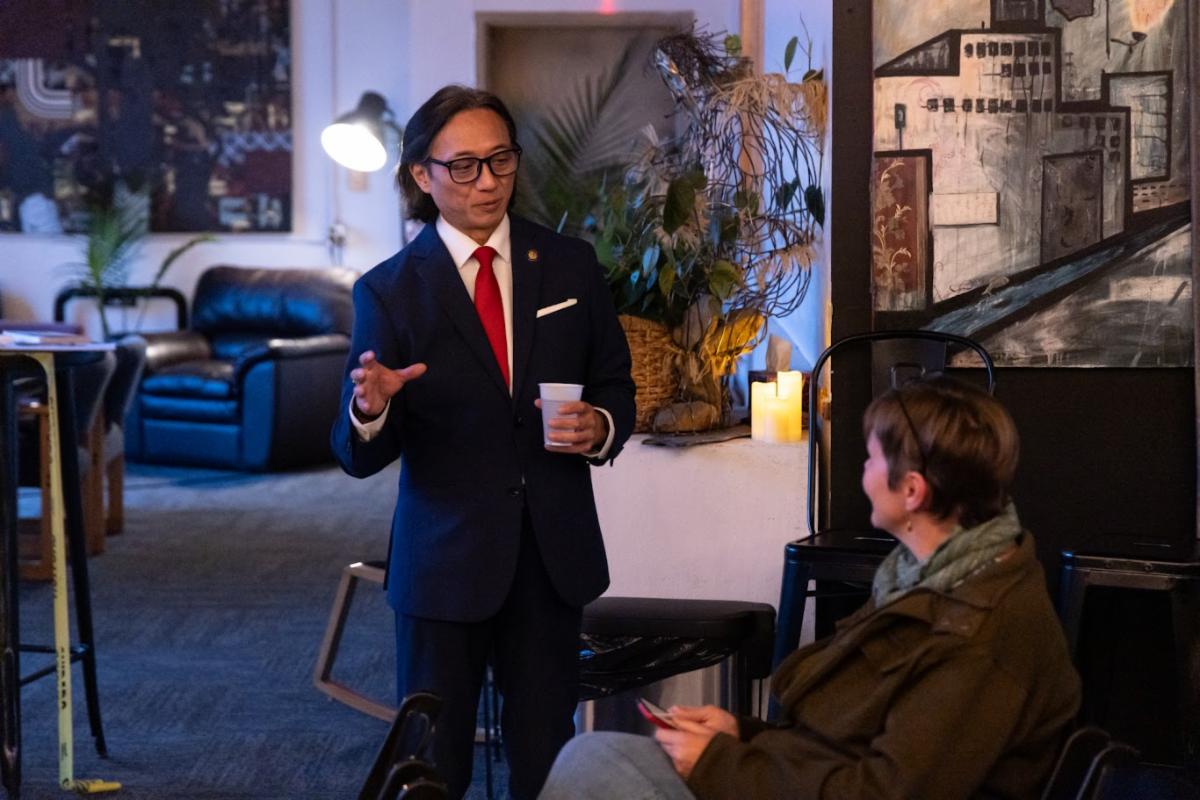
For those who have not had the opportunity to visit my office in Fairbanks during the interim or visit my Juneau office, I have a very strict Open Door Policy. Why? Because I believe that as a legislator representing a community I love, I should be open to dialogue with my constituents. It’s why I post on social media in the ways I do. It’s why I organize these town halls. All to facilitate your voice, your suggestions, so I may work for you. While I have values that I strongly believe in, I know that at the end of the day, it is about our community. I aim to build an environment where we can discuss our challenges with the dignity they deserve. By choosing empathy, we ensure that our political process remains a tool for progress rather than a source of division.
I wanted to take a moment to thank my fellow legislators in the interior delegation for their moments of doing the same. Thank you, Senators Cronk and Myers, and Representatives Dibert, Carrick, Stapp, Prax, Tomaszewski and Schwanke, for prioritizing our community over partisan politics.
| | |
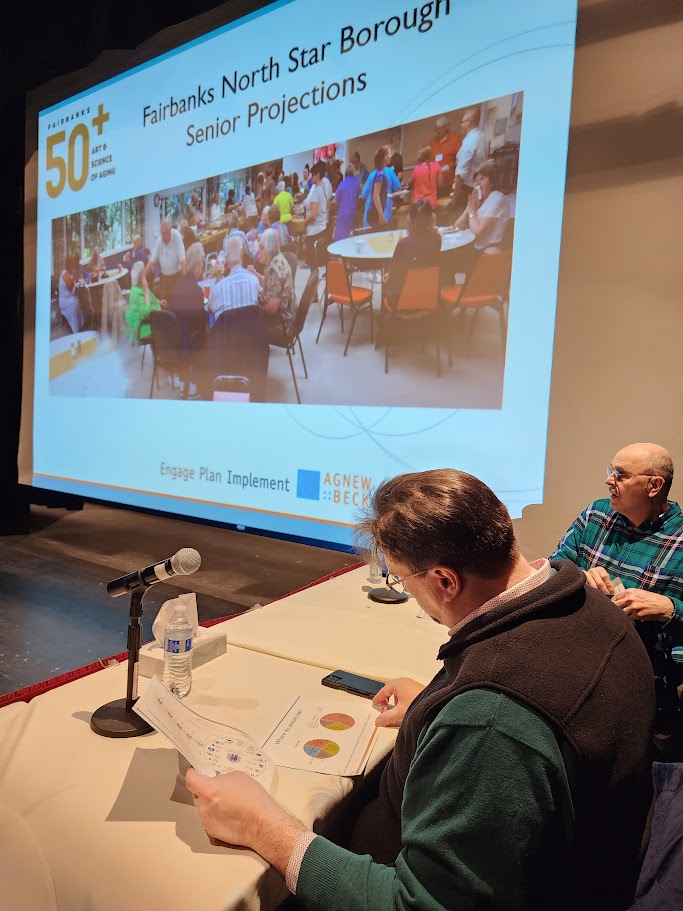
Something I wanted to share was an event, at the Carlson Center on Friday, May 8th, for the 2026 Fairbanks at 50 Plus Art and Science of Aging Summit. This event is being organized by Foundation Health Partners, with some assistance from the Fairbanks Mayor Mindy O’Neal and Borough Mayor Grier Hopkins.
This free event is packed with activities showcasing resources to help create an age-friendly Fairbanks. The Carlson Center Arena will offer many opportunities to visit with providers of home, community, and facility-based services that support healthy aging in Fairbanks.
Throughout the day, there will be engaging demonstrations and classes that cover a variety of practical topics like health, recreation, caregiving, retirement, and emergency preparedness. Attendees will also receive free AARP emergency go bags (while supplies last) and have access to helpful tools such as car-fit consultations, all designed to enhance your safety and independence. We look forward to seeing you there!
Overall, much remains to be discovered when considering the experience of growing older in Fairbanks. This event offers a valuable way to learn and find answers for myself and for others who matter to me.
Carlson Center from 8:30 a.m. to 4:30 p.m. on Friday, May 8th. Regardless of age, this event promises something valuable. Make a plan to attend the Senior Recognition Luncheon and the Alaska Health Fair Screenings and Blood Draw event! Visit this link for more details and to register.
| Should Home School Students Be Considered Part of Their Home District? | |
My colleagues on the Senate Education committee introduced SB277 to further enhance education in Alaska. The bill would provide more oversight on the Alaska correspondence programs, it adds one time funding of $58 million for energy payments to offset higher fuel cost, increase funds in pupil transportation and provide incentive grants for districts to help improve reading proficiency which was approved through the Alaska Reads Act.
Currently, Alaska has over 30 correspondence programs enrolling more than 24,000 students across Alaska, as of last year. More than half of those students were enrolled in correspondence programs administered by districts outside of the district where they reside.
With so many different correspondence programs the legislature has not received information to review their outcomes versus neighborhood schools. A much larger percentage of students in non-correspondence schools take AK STAR state standardized tests compared to those in correspondence programs. Correspondence programs often see lower graduation rates than standard public schools in Alaska. Families whose students are enrolled in IDEA, for example, receive an allotment of $2,700 per student per year, according to IDEA’s website.
To address this discrepancy, the legislature will require Alaska school districts provide an annual report to the Legislature with details on the correspondence programs they operate, including how much money the district provides to students in the programs, how many students are in the programs, where those students live, what the allotments are used for, and more.
SB277 should be coming up again in the next few days and I will continue to work with my fellow Senators to make sure the bill provides positive outcomes for Alaskan students.
| Removing the barriers to Social Security | |
Right now, Alaska is the only state in the union that is unable to apply for a lost Social Security card fully online. As it stands, an Alaskan can start the process online, but would either travel to one of the three Social Security offices in Juneau, Fairbanks, or Anchorage, to present documents confirming their identity or mail those documents into one of those offices. Either of these options are subpar considering we are currently living in a digital age. By being able to apply for a lost Social Security card fully online, the state would save time, money and worry when it comes to the common occurrence of dealing with a lost Social Security card.
SB237 is the companion bill for HB213, which is being carried by Representative Nellie Jimmie. Her office did a lot of work on this piece of legislation before she asked me to run the Senate companion bill. I was happy to run a Senate companion for this bill for two reasons. One, this is a common-sense bill that will help Alaskans, especially rural Alaskans, more easily regain their Social Security card. Two, I have great respect for Representative Jimmie and was happy to help her get this bill passed.
While drafting this bill, both Representative Jimmie and I were concerned about protecting the private data of Alaskan citizens. Living in a digital age is convenient, but it can lead to unintended consequences if the right precautions aren’t taken. That is why I added a section to the original draft of this bill to ensure that Alaskan data could only be shared with Governmental, Tribal, or non-profit organizations. This provision would ensure that private data could not be shared with a for-profit organization. Our data is being manipulated daily by companies trying to sell us this gadget or that widget. The citizens of Alaska don’t need to worry about that while they are just trying to replace a lost Social Security card.
This bill is currently in the House Senate Affairs Committee and is awaiting its first hearing.
| A Reform for our Active Duty Community Members | |
I take great pride in being the Co-Chair of the Joint Armed Services Committee, especially since I represent the brave soldiers of Fort Wainwright. This committee was originally created in 1996 by Senator Lisa Murkowski while she was serving in the Alaska State Legislature, in response to the Base Realignment and Closure program (BRAC). BRAC was implemented to streamline the U.S. military infrastructure, and at the time, several Alaskan military bases were on the chopping block. This is why JASC was created to work both during the session and in the interim to advocate for keeping the bases in Alaska in operation.
The work JASC did was highly successful, as only two bases closed due to BRAC. One being the Naval Air Facility Adak, and the other being Kulis Air National Guard Base. Fort Wainwright, Fort Greely and Eielson Air Force Base were spared the chopping block. The last round of BRAC concluded in 2005, but JASC has persisted since then. While there is always the concern that further BRAC actions will happen in the future, my fellow JASC Co-Chair Representative Gray and I knew that JASC could be used to better advocate for military personnel and bases. So we worked together to update the statutes governing JASC's responsibilities.
SB282 and HB382 are the companion bills that came from that effort. These bills mirror each other and give seats on JASC to both the Alaska Municipal League and the Alaska Federation of Natives, where before they shared one seat on the committee. The bulk of the statute updates concern the scope of the committee. Three additional objectives were added, which are to support the state’s central role in military defense, review and recommend state policy responses to national defense and arctic security initiatives, and convene hearings and stakeholder consultations on emerging defense issues.
Even though this legislation has not been passed yet, JASC has informally been performing those objectives for the past several years and will continue to do so this year. To that end, there will be a JASC hearing on May 8 from 8:00 am – 9:30 am to receive a briefing from several military leaders on the state of defense in Alaska. I look forward to hearing from these leaders. This hearing will be streamed live and can be accessed via Gavel to Gavel.
| | |
My Staff and I are Here for You
As always, I will continue to keep you updated on what I’m working on in Juneau throughout the session. If you have any questions about anything going on in the Capitol or at home, feel free to give me a call or shoot me an email – as always, my staff and I are working for you. We will assist you with the issues important to you and your family.
| | Working Hard for Fairbanks Families, | | |
Senator Scott Kawasaki
Alaska State Senator
Serving the City of Fairbanks, Ft. Wainwright & Badger Road
| | |
As your Senator, I am here to listen and help. Contact me anytime. | | | | | |