|
Hello from Juneau! With the legislative session now in its second month, the Capitol is a busy place. It’s great to be meeting with constituents from across Senate District C.
The Senate Majority remains steadfast with our priorities to pass a fiscally balanced budget, support education, and address retirement, the gasline, and fisheries issues.
Rural Health Transformation Program (RHTP)
RHTP will bring approximately $272 million annually for 5 years to Alaska to target improving health care delivery in rural and remote areas. Our Senate Majority have had multiple meetings and hearings on RHTP with the state Dept. of Health (DOH), Alaska Native Tribal Health Consortium (ANTHC), and the Alaska Community Foundation. It is important that the state and stakeholders discuss the program in detail to ensure that Alaskans are gaining true benefits from this funding and will not be at risk of having to return money. DOH has held regular meetings with stakeholders around the state to provide information and recently shared they are now accepting Letters of Interest through March 11. You can find more information on their RHT webpage.
The House introduced HJR 32 to provide intent for the legislature’s role and oversight of RHTP such as maximizing investment in health care access for all residents, expansion of telehealth infrastructure, workforce development, maternal and child health services, and creating sustainable financing models to ensure program benefits continue beyond the five-year funding period. Legislators of both bodies look forward to working cooperatively with both state and federal administrations to maximize the use of this funding.
Gasline
The Senate Majority continues to provide due diligence on the AK LNG gasline project. The estimated cost is approximately $11 billion, though Glenfarne, the gasline developer, has not shared any fiscal information with the legislature to date. Through the Alaska Gasline Development Corporation (AGDC), the state is a 25% partner in the project and will have the choice to invest further, up to 25% in the project infrastructure.
Glenfarne has claimed they will begin work on the 800 mile gas line by the end of the year. It is unclear if they will be able to maintain this ambitious schedule and if they will need certification from the Regulatory Commission of Alaska (RCA). As well, the legislature has not seen any binding gas sale documents or purchase agreements for the project. Recently, the Alaska Railroad told legislators the railroad can handle heavy construction materials, but they will not invest in the pipeline until the developers fully commit to the project.
The Governor stated he plans to introduce a bill that would reduce oil and gas property taxes for the state by 90%. This is a concern for our borough municipalities such as the Kenai Peninsula. This large reduction in oil and gas property taxes would shift the burden to local taxpayers.
The Senate Majority continues to hold hearings to ensure the state has the information it needs to understand potential long-term implications for Alaska’s economy and fiscal future.
Education
Following reports of student health and safety concerns at the state-owned Mt. Edgecumbe High School this past month, our Senate Finance Co-Chairs toured the residential school in Sitka attended by over 300 students from across Alaska and run by the Dept. of Education & Early Development (DEED). Legislators were concerned with the state of the facilities and loss of staff and students and the affect this was having on the student body. After the tour, the Senate Finance Committee held hearings with DEED to address these issues.
Last week, the Senate passed SB 146 which includes Mt. Edgecumbe as a funding recipient under the Regional Educational Attendance Area (REAA). This bill allows Mt. Edgecumbe to submit requests to be placed on the major maintenance list similar to all other school districts. The bill also enables rural school districts to apply for major maintenance grant funding for teacher housing from the REAA Fund.
New Revenue
The Senate Resources Committee has made several changes to the Governor’s main fiscal plan bill, SB 227. These changes include:
- Removed: Statewide Sales tax.
- Removed: conditional effect language that this bill must pass together with the Governor’s other fiscal plan bills.
- Added: language from SB 113 - Adopts market-based sourcing to impose our state corporate income tax on out-of-state corporations that operate online. (est. to raise $25-65 million annually)
- Added: language from SB 92 - requires certain oil and gas S-Corporations and Limited Liability Companies to pay corporate income tax; but amended with brackets for taxable income levels and tax rates beginning at $1 million net income. (est. to raise $100 million annually)
- Added: Education Head Tax – based on yearly income (ranging $10-$30/year), intended to fund public education and deferred maintenance of education buildings and existing infrastructure.
- Removed: oil and gas production tax statutes created by SB 21 (passed in 2013) and replaced with a simple 17.5% gross model tax rate.
- Kept the same: Institutes a $0.15 per barrel oil tax; intention to use funds to cover pipeline corridor maintenance / Dalton Hwy. (removed sunset clause from Governor’s version) (est. to raise $15 million annually)
- Effective date: all sections effective Jan 1, 2027, except SB 92 – S-Corp section takes effect Jan 1, 2026.
This bill is now in Senate Finance.
As shared in my newsletter last month, the Institute of Social and Economic Research (ISER) provided a presentation to all legislators in January regarding various fiscal plan options. You can watch the presentation here. ISER’s presentation indicated that increased taxes on businesses would have a smaller impact on residents when compared to other options like a sales tax, income tax or property tax. However, any changes to corporate tax structure can also have unforeseen long term impacts on business investment. You can read more about the 2026 Fiscal Option Summary here.
FY 2027 Budget
The House is scheduled to pass HB 289 Governor’s Supplemental budget bill this week. This bill included funding to restore the $70 million in matching funds for the current year Dept. of Transportation (DOT) projects that the Governor vetoed last year. Construction industry stakeholders have testified about their concerns regarding the matching funds for this year’s DOT projects. Passing this supplemental earlier rather than later will help provide more certainty for the upcoming construction year with companies and their employees. The bill also includes funding for disaster funding, fisheries management, Medicaid services, public assistance, and senior benefits in the current fiscal year. The bill also pays back the Higher Education Investment Fund that was used to cover last year’s supplemental bill shortfall.
I do not anticipate that the House will get the ¾ vote needed to approve the $490 million draw from the Constitutional Budget Reserve (CBR) to cover this supplemental budget. Once it passes the House, the bill will move to the Senate Finance Committee.
The Governor’s amendments to the operating, capital and supplemental budget bills were released last week. Operating and supplemental amendments include funding to support personal services in the Dept. of Corrections to address inmate medical needs, increased funding for SNAP and Public Assistance, matching funds for Medicaid payments to service providers, and additional funds for the Village Public Safety Officer (VPSO) program. Also included is the $272 million for the Rural Health Transformation Program federal grant (discussed above). Capital amendments include funding for Public Safety ballistic protection equipment, an integrated resource management system for the Dept. of Natural Resources, replacement and safety upgrades for Trooper aircraft, and improving development and financing of land to improve access to homeownership. Click here for an overview of the amendments presented in Senate Finance.
The Governor’s amendments increase spending by an additional $145 million. These amendments, when added to the Governor’s FY27 budget and full PFD, would require a 70% draw from our CBR saving account. That is unacceptable. The Senate Majority will work to develop a budget that avoids depleting our savings while helping to address the critical infrastructure needs of our communities and state.
Public Testimony on Budgets
The Senate Finance Committee will be taking public testimony on SB 213 Operating Budget, SB 214 Capital Budget, SB 215 Mental Health Budget, and the SB 231 FY 26 Supplemental Budget. Your comments during public testimony hearings are crucial to helping create a balanced budget that provides services and infrastructure needed in our district and state.
Public Testimony days and times:
-
Thur. Feb 26 at 9am. For Juneau, Southeast, Prince William Sound, Kodiak, Offnets. Please sign up or call in by 10:15am.
- Thur. Feb 26 at 1:30pm. For Nome, Bethel, Kotzebue, Utqiagvik, Unalaska, Dillingham, Offnets. Please sign up or call in by 2:45pm.
- Fri. Feb 27 at 9am. For Fairbanks, Interior, Copper River Valley, Offnets. Please sign up or call in by 10:15am.
-
Fri. Feb 27 at 1:30pm. For Anchorage, Matanuska-Susitna Valley, Kenai Peninsula. Please sign up or call in by 2:45pm.
There are 3 ways you can testify:
I look forward to my work on the Senate Finance Subcommittees to review the budgets and advocate for the services that are important for our district and the state. You can follow the committee schedules and public testimony opportunities on akleg.gov or contact your regional Legislative Information Office (LIO). You can review the Governor’s proposed and amended budget here: omg.alaska.gov. The House and Senate Finance Committee and subcommittee reports will be posted here once completed: legfin.akleg.gov.
2026 Legislation
HB 117: Commercial Fishing – Set Gillnet Co-op
This bill would allow two or more salmon fishery set gillnet permit holders to enter into a multi-permit cooperative operation with a maximum of ten permit holders per cooperative. The salmon harvested by these co-ops would be exempted from individual delivery requirements and could be stored together, delivered under one fish ticket, and sold by one member of the co-op or transporter. This bill is in House Rules.
SB 140: Fire Station Grant Program
This bill establishes the Fire Station Grant program. The fund will act as a matching grant program available for construction or renovation of an eligible fire station. This bill passed Senate Finance and is now in Senate Rules waiting for schedule on the Senate Floor.
HB 78 Retirement Systems; Defined Benefit Option
This bill would bring back a defined benefit pension program for state employees. Alaska has been losing valuable teachers, police, marine highway staff, and firefighters due to our poor retirement system. Reports show that new employees are less likely to remain in Alaska and more are likely to leave for jobs in other states that provide better retirement programs. Retaining quality employees is a top priority for our Senate Majority. This bill passed the House and Senate Labor & Commerce. It is now in Senate Finance.
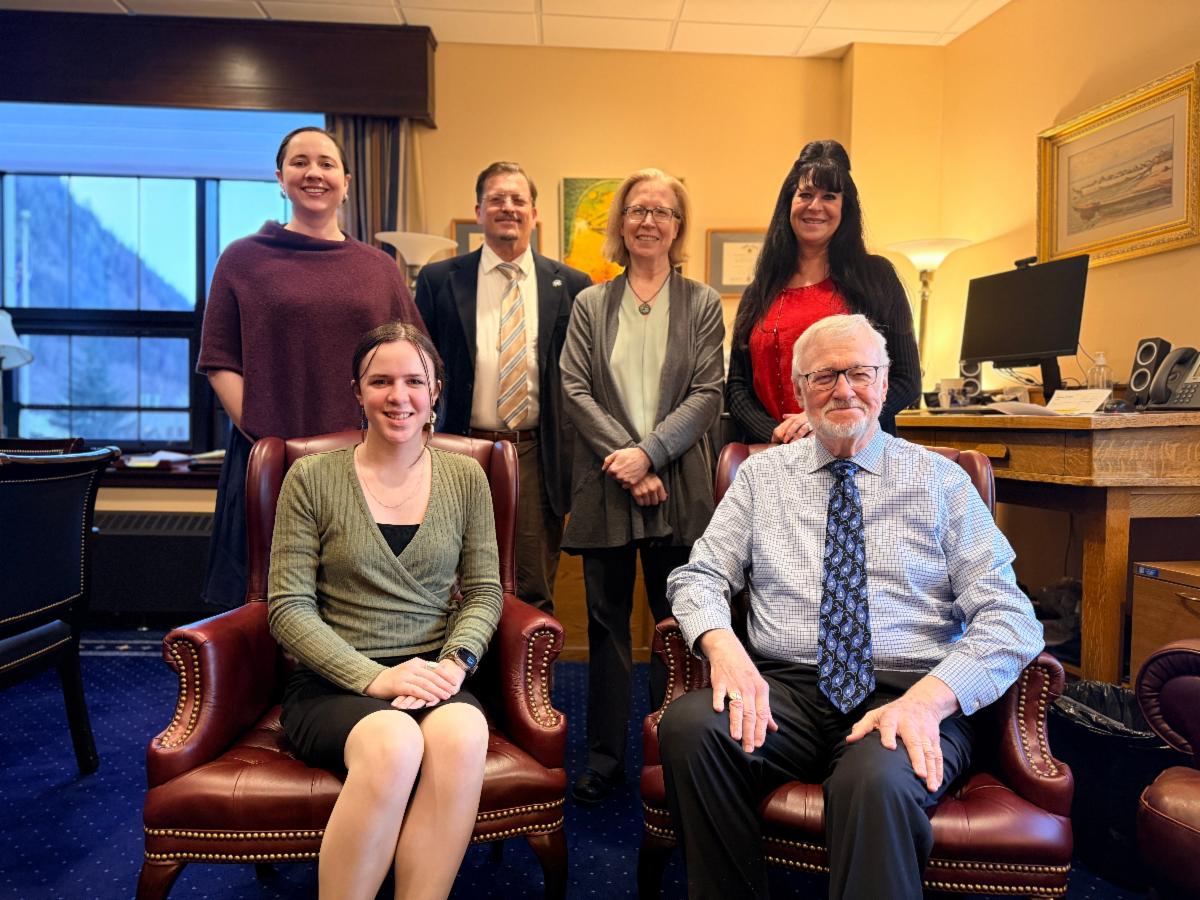
Notes from our 4H High School Intern
|